


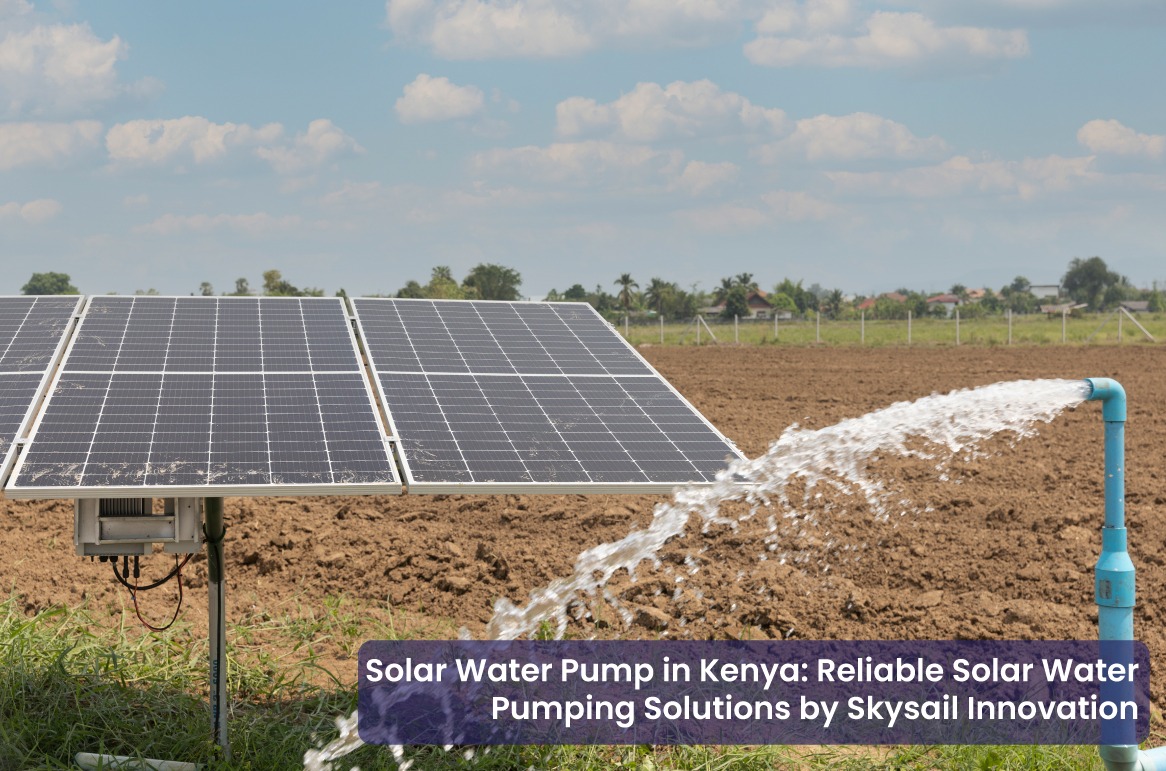
Skysail Innovation is changing the way people in Kenya access clean and reliable drinking water. Clean and reliable freshwater is still hard to come by for many people living in the rural and off-grid parts of Kenya, where obtaining this resource can be especially difficult due to the lack of infrastructure and the fact that many of these areas are far away from traditional power sources. The solar-powered installation of a solar water pump is a great example of how solar technology has been utilized in Kenya to provide an environmentally sustainable and long-term source of water. The solar water pump uses photovoltaic panels to capture solar energy and convert it into electrical power, which then powers the pump that draws the water from boreholes, rivers, lakes, and shallow wells. The solar pump does not require any diesel or unstable power from the grid to operate.
What Do You Use to create a Solar-Powered Water System
Solar-powered pumps use the energy from the sun to pump water. There are several components within this system: Solar panels, Pump (submersible or surface), Controller and/or Inverters and water storage tanks all form part of the solar-powered pump system.
Main Components of Solar-Powered Pumps
Solar Panels: collect sunlight and convert it into electrical energy
Pump Units: will produce a submersible pump or a surface-mounted pump depending on where the water comes from
Controller/Inverter: will regulate the power supplied to the solar pump so that it operates efficiently.
Storage Tanks: allow access to water during the evening when there is no solar energy available.
Solar pumps are scalable for all types of applications, from small agricultural farms to large-scale irrigation projects or as part of a community water supply scheme, and can be customized accordingly.
Benefits of Using a Solar Water Pump
The benefits of solar water pumps include:
Cost Savings—A solar water pump eliminates recurring fuel and electricity costs. Once installed, operating costs will be minimal, and the pump can be used for many years.
Reliable Water Supply—Unlike diesel pumps, a solar water pump operates whenever the sun is shining, therefore providing an uninterrupted water supply during periods of drought.
Eco-Friendly Technology—Using solar energy to pump water minimizes greenhouse gas and environmental pollution, which supports Kenya's renewable and sustainable energy objectives.
Low Maintenance—A solar-powered water pump has fewer moving parts than a standard pump, thus requiring very little maintenance over its long use.
The Benefits of Solar Water Pumps in Kenya
Agriculture
Solar-powered water pumps allow farmers to efficiently irrigate their crops, ultimately resulting in improved crop yields and a reduced reliance on rainfall as a water source.
Livestock Management
In arid and semi-arid regions, adequate access to water is key for keeping livestock healthy and productive.
Community or Domestic Use
Solar-powered water pumps supply clean and reliable water for villages, schools, and health centers where there is no access to the electrical grid.
Commercial and Industrial Use
Solar-powered water pumps meet the water demands of many different types of commercial and industrial applications (e.g. hotels, resorts, and construction sites) without the cost of high operational expenses.
The advantages of selecting solar water pumping systems over traditional systems will be highlighted below:
- Protection against fluctuating fuel costs
- Sustainable Water Supply to Remote/Off-Grid Areas
- Long-Term Investment with High Efficiency
- Easily Scaled for Future Water Needs
- Supports Global Sustainability Initiatives
Given Kenya's climate and geography, a solar water pumping system is not only an alternative; it is the best future-proof option.
What Factors Should Be Taken into Consideration When Choosing a Solar Water Pump?
Depth of Water Source: Determines pump type and wattage.
Daily Water Requirement: Influences system size.
Solar Radiation Availability: Influences panel wattage.
Storage Needs: To ensure that water is available during non-daylight hours.
Proper consideration of these factors will allow for proper installation and ultimately maximize the efficiency of the system throughout its lifetime.
Frequently Asked Questions
Q1. What is the expected lifespan of a solar water pump?
Most solar water pump systems will last between fifteen and twenty-five years if they receive appropriate care, while most manufacturers offer warranties lasting significantly longer than that for typical solar panel use
Q2. Can you run a solar water pump when it is cloudy out?
A solar water pump can operate even in cloudy weather; however, the amount of water produced from the solar water pump will be considerably reduced compared to direct sunlight conditions. The use of a storage tank allows for sufficient water to be stored during times of little or no sunlight.
Q3. Can solar-powered water pumps be used in boreholes?
Yes, a submersible solar water pump is designed to work efficiently in deep boreholes.
Q4. What type of maintenance is required for solar-powered water pumps?
Solar-powered water pumps require regular maintenance to maintain their efficiency. This includes cleaning the solar panels and checking the system for proper operation. The maintenance for a solar-powered water pump does not require that the owner change oil or fuel.
Q5. Are solar-powered water pumps expensive to install?
Although there are costs involved in installing a solar-powered water pump, over time the savings that come from reducing your dependence on fuel and/or electricity make this type of system a good value.
Conclusion
Solar water pump solutions are becoming more efficient and sustainable for the agricultural, domestic, and commercial sectors in Kenya as the demand for water increases. Solar-powered pump systems can provide farmers and businesses in Kenya with an efficient, dependable way of accessing water while minimizing both cost and environmental effects. Skysail Innovation manufactures the latest in solar-powered pumping equipment so that you can leverage solar energy to drive water access for your farm/business!